Sophia Stolzes: The Drama to Fit the Sugar Rush We’ve Waited For
Part confectioner, part conceptual artist, Sophia Stolzes is not in the business of comfort baking. Based in Vienna, she conjures edible sculptures that are as fleeting as they are fantastical — whorls of pastel fondant, lacquered glaze, and architectural stacking that recall both Baroque excess and club-kid rebellion. Her philosophy? One cake, one chance. Repetition is banned. Perfection is pursued through persistence.
Trained in the art of patisserie and versed in art history, Stolzes is the visual dramatist of the dessert world. Here, she speaks to MBC about the poetry of precision, culinary time limits, and the joy of making something that’s made to disappear.

MBC: You’re known for your precision, but also your instinct. How many trial runs does it typically take for a recipe to become a final work?
Sophia: So usually, I just go for it. I have a vision in my head, the recipes are second nature, and I start mixing. If something doesn’t work out, my innate stubbornness eventually lands me on a solution.
MBC: Stylised cakes today often live longer on Instagram than they do on the plate. How do you approach that contradiction?
Sophia: To be totally honest, that’s the whole point, isn’t it? To create a vanishing moment that somehow survives its own disruption — my cakes live on in memories, camera rolls, social feeds. They become permanent through documentation. In some ways it feels like socials give each creation a second life.
But as the designer, nothing can match the physical moment: the drama, the taste, the smell, the texture. The rituals brought to life by those in the room. Because cakes, like food in general, engage all the senses. The emotional trigger of that first bite to the lasting impression, matters most. The content? It comes naturally when something feels (and tastes) right.
MBC: Your background in art history gives your work a conceptual edge. When starting a new piece, are you referencing movements, materials, moods, or something else entirely?
Sophia: I’m grateful for my background which weaves its way into my vision, but must admit my ideation process is more instinctual. I’ll hear about an event, receive a brief or simple request, and my brain clicks. It’s like an instant translation, a fully formed puzzle, even, that then must be picked apart into tangible pieces.
There are times when I am walking through the street and a dress, a building, an image catches my attention and simply turns the subject into a cake. Cake is the language and the better I understand the subject, the better the cake.

MBC: The NYT called your cakes “a canvas for personal identity, emotion, and even rebellion.” Tell us more about your lens on the medium?
Sophia: I really see cake as a medium – not just a dessert. It’s something intimate, sensual, and deeply cultural. You eat it with people you love, in moments that matter. So for me, it becomes a way to express emotion, identity, sometimes even protest, without saying a word.
Cakes and sweet treats are portrayed as feminine, decorative but with design and flavour we can be bold, confrontational, opinionated. Nothing lasts but the way something makes you feel.
MBC: You create work that’s meant to vanish, but that doesn't mean it’s simple. What’s been one of your most technically complex or time-pressured commissions?
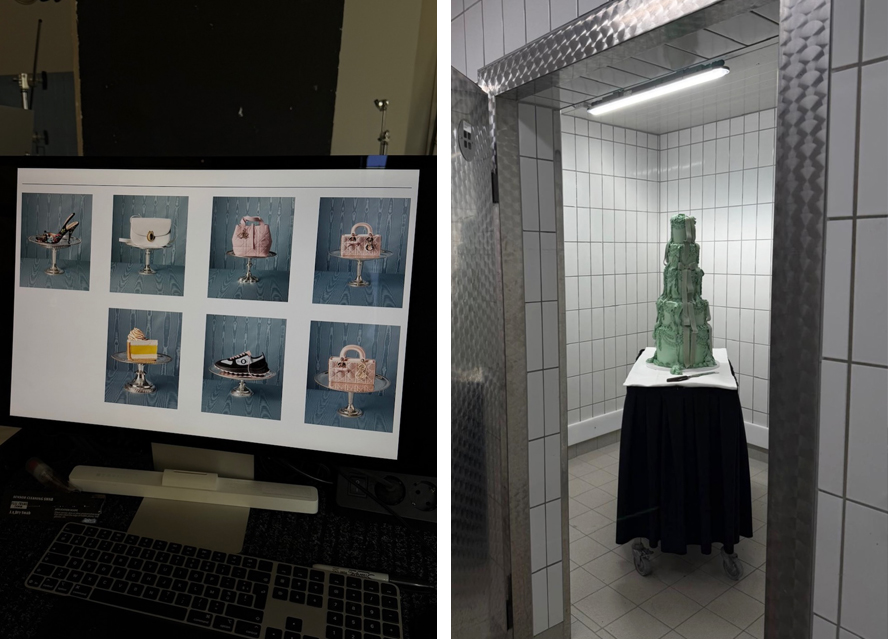
Sophia: I once received a brief from a high-end luxury brand - beautiful on paper, executionally a nightmare. The client didn’t understand their request didn’t functionally allow and only saw the final product. The result? Three-weeks of twenty-hour days, trial, error and tears. I had a six-pack at the end of it from the stress and sugar lifting. In the end, the cake came together but it was the closest I have ever been to walking away from the kitchen altogether.
MBC: What role does failure or surprise play in your process? Is there ever room for chaos?
Sophia: Failure is not an option but chaos is everpresent. I have the very word tattooed on my arm — so that says a lot. My job is chaotic and I am prone to operate in a worst-case-scenario mindset. So when things come together, the surprise is welcomed. The panic, inevitable. Normally, there are five to seven calls to my mother in between.
These emotional rollercoasters are not negative, I embrace them as part of the process. When you loosen the control, you allow for the unexpected, the real to emerge.
